
Search Insights
7 Ways to Cut Real Estate Advertising Costs in 2026
Actionable tactics for New Zealand real estate agents to cut Meta ad costs—flat fees, small tests, short campaigns, hyperlocal targeting and real photos.
In 2026, advertising costs for real estate have surged, especially on platforms like Facebook and Instagram, where CPCs climbed by 33% in a year, averaging around NZ$1.80. Meta's new Andromeda algorithm is driving these increases by offering precise targeting at a higher price. For New Zealand real estate agents, where advertising costs can fluctuate wildly - up to four times the global average - managing ad budgets effectively is crucial. Here are seven actionable strategies to reduce costs while maintaining results:
- Flat-Fee Services: Opt for fixed-rate ad management to avoid rising fees tied to your ad spend.
- Basic Ad Packages: Start small with NZ$5–NZ$15 daily budgets to test and refine campaigns.
- Shorter Campaigns: Run ads for 7–14 days to avoid creative fatigue and adapt to cost changes.
- Manage Your Own Ad Account: Use Facebook Ads Manager for better control and lower costs.
- Target Specific Suburbs: Focus on hyperlocal audiences and buyer types to minimise wasted spend.
- Use Photos, Not Graphics: Leverage existing property images for cost-effective, high-performing ads.
- Turn Off Optional Features: Disable unnecessary tools like the "Boost Post" button to focus on leads.
These strategies focus on smarter spending, keeping costs predictable, and ensuring your ad dollars deliver genuine leads. Whether you're working with a modest NZ$500 budget or spending thousands monthly, these methods can help you navigate New Zealand's volatile advertising market.
How To Lower Facebook Ads Cost in 2025 (Step by Step)
1. Use Flat-Fee Services Instead of Percentage-Based Agencies
Traditional advertising agencies often charge a percentage of your ad spend, which means the more you invest, the higher their fees. A flat-fee model, however, offers a fixed monthly rate, no matter how much you spend on ads. This approach keeps costs predictable and gives you better control over your budget.
Cost-Effectiveness for Real Estate Agents
Flat-fee pricing separates management costs from your actual advertising spend. For example, if you raise your budget from NZ$1,000 to NZ$3,000, your management fee stays the same. On the other hand, percentage-based agencies would charge you more as your budget grows - even if their workload doesn’t increase.
This model also aligns better with your interests. Percentage-based agencies profit as your ad spend rises, but flat-fee providers earn the same regardless of whether your campaign costs NZ$500 or NZ$5,000. As NiKa Consulting Group explains:
"Our job is to get you the biggest bang for your advertising buck, not to find ways for you to spend more."
For GST-registered agents in New Zealand, flat fees also simplify tracking the 15% GST, which can often be reclaimed. This straightforward pricing helps streamline campaign management while avoiding unexpected costs.
Maintaining or Improving Campaign Performance
Flat-fee services don’t mean compromising on results. Providers focus on improving your Quality Score, which can reduce your cost-per-click (CPC) by up to 50% with a perfect score. By leveraging Meta’s advanced targeting tools, like AI-driven Advantage+ campaigns, these agencies ensure your ads reach high-intent buyers without requiring manual adjustments.
This approach balances cost efficiency with effectiveness, making it possible to sustain or even improve campaign outcomes while keeping fees fixed.
Relevance to the New Zealand Real Estate Market
In New Zealand’s real estate market, where CPCs typically range from NZ$0.60 to NZ$3.50, cost fluctuations can be a challenge. Flat-fee services provide stability, especially during seasonal peaks like December, when CPCs climbed to NZ$1.50.
Some local agencies now offer flat-fee ad management starting at NZ$150 per month, plus your click budget. Full-service packages range from NZ$287 to NZ$880 per month. For agents spending between NZ$1,000 and NZ$3,000 on ads each month, switching to a flat-fee model can save hundreds of dollars compared to percentage-based pricing.
2. Start with Basic Ad Packages
Among the seven actionable strategies, starting with basic ad packages offers a low-risk way to dip your toes into advertising. With a starting budget of just NZ$5 per day, you can test different ad creatives and messaging before committing to larger investments.
Cost-Effectiveness for Real Estate Agents
Spending as little as NZ$10 can significantly boost your reach - taking you from about 30 organic impressions to over 6,000 paid ones.
For real estate agents in New Zealand, where cost-per-click (CPC) typically falls between NZ$0.60 and NZ$3.50, this approach allows for affordable experimentation. A daily spend of NZ$5–NZ$15 gives you the chance to test various property photos, headlines, and calls-to-action. Once you find what resonates with your audience, you can scale up. This tactic is especially useful given the rising CPCs in the real estate sector, which saw a 33% increase from NZ$0.84 in January 2025 to NZ$1.12 in January 2026.
Enhancing Campaign Effectiveness
Meta's Andromeda system uses advanced neural networks to match ads with micro-audiences, making ad testing more effective. This automated targeting can outperform manual setups by identifying high-intent buyers more efficiently.
The numbers speak for themselves. In January 2026, Wellington Electrical Services transitioned from manual targeting to an automated Advantage+ setup. The results? Their cost per lead dropped from NZ$67 to NZ$42 - a 37% reduction. At the same time, lead volume surged by 140%, and conversion rates climbed from 12% to 18%. This highlights how simple testing combined with automation can deliver better results without the complexity.
Easy Implementation for Real Estate Agents
For a straightforward setup, use Meta Ads Manager instead of the "Boost" button. This gives you access to the "Awareness" campaign objective, which is ideal for maximising reach at a low cost. If you're advertising real estate, make sure to enable the "Special Ad Category (Housing)" setting. This ensures compliance with anti-discrimination policies while limiting targeting to a 24-km radius.
Keep things simple by consolidating your budget into fewer campaigns. Spreading a small budget across multiple ad sets can dilute performance. Instead, focus on achieving the 50-conversions-per-week threshold, which helps unlock better auction pricing. Prioritise Reels and Stories placements - these come with lower CPMs (NZ$6–NZ$12) compared to Feed placements, which range from NZ$12 to NZ$25.
Tailored for New Zealand's Real Estate Market
In New Zealand's unpredictable advertising landscape, managing your budget wisely is crucial. Small businesses here often allocate NZ$200–NZ$1,000 per month for advertising. Starting with NZ$15–NZ$20 per day provides enough data for Meta’s algorithm to optimise your campaigns without overspending during the learning phase. Even modest budgets can generate meaningful leads if paired with compelling creatives and prompt follow-ups.
3. Run Shorter Campaigns
Cost-Effectiveness for Real Estate Agents
Shorter campaigns can help you manage your budget more effectively by avoiding creative fatigue and adapting to seasonal ad cost fluctuations. In New Zealand's real estate market, these costs can vary significantly - CPC rates surged by 51% between November and December 2025. By focusing on high-intent months like May (NZ$1.45 CPC) and December (NZ$1.50 CPC), you can maximise returns while steering clear of overspending during slower months like June or November.
Ad fatigue is another challenge. Even the most successful ad creative can lose its impact within just 10 days in local markets. Running short, 7 to 14-day campaigns keeps your ads fresh and prevents performance drops caused by stale creative. This approach not only keeps your ads relevant but also improves overall campaign efficiency.
Maintaining or Improving Campaign Effectiveness
Although platforms like Andromeda need 7–14 days to optimise, you can still run shorter campaigns effectively. Start with a testing budget of NZ$5–NZ$15 per day for 7 days, then scale up to NZ$20–NZ$40 once the campaign shows strong performance. This method limits budget waste during the learning phase while providing the algorithm with enough data to perform well.
Instead of spreading your budget thin across multiple long-running ad sets, focus on fewer, shorter campaigns. This concentrated approach improves auction performance and ensures better results. Keep an eye on your frequency metric - if it exceeds 3.5–4.0, it’s a sign to refresh your creative or end the campaign.
This flexible strategy ensures your campaigns remain effective, even as market conditions change.
Relevance to the New Zealand Real Estate Market
New Zealand's real estate CPC rates are highly volatile - about four times more than the average. Between January 2025 and January 2026, the average CPC was NZ$1.17, but monthly fluctuations were substantial. Shorter campaigns allow you to adapt quickly to these changes, avoiding costly mistakes during slower periods. This rapid testing and adjustment method is crucial in a market where conditions can shift dramatically within weeks.
4. Use Your Own Facebook Ad Account
Cost-Effectiveness for Real Estate Agents
If you're a real estate agent, using your own Facebook Ads Manager account instead of relying on the "Boost" button can save you a lot of money. The Boost feature primarily focuses on getting likes and comments, which doesn’t always translate into actual leads. In fact, it’s often one of the priciest ways to advertise. By switching to Ads Manager, you unlock advanced targeting options that help lower your cost per lead.
Take this example: in late 2025, Meta's Advantage+ Leads campaigns proved to be 22% cheaper in cost-per-result compared to manually targeted campaigns. A Phoenix real estate brokerage with 18 agents managed to slash their average cost per lead from NZ$95.50 to NZ$29.50 - a massive 69% drop - just by using their own Meta account with proper tracking. For New Zealand agents, where the average cost per click ranges between NZ$0.60 and NZ$3.50, these kinds of savings can make a big difference, especially when running multiple campaigns. Not only does managing your own account save money, but it also gives you better control over who sees your ads.
Ability to Maintain or Improve Campaign Effectiveness
Efficiency is key when running ad campaigns, and having direct control over your account helps you achieve it. Meta’s 2026 Andromeda system takes things up a notch by using advanced neural networks to match your ads with highly targeted micro-audiences. When you manage your own account, you can also integrate the Conversions API (CAPI), which sends first-party CRM data back to Meta. This improves Event Match Quality and can cut your cost per lead by up to 70%.
"Creative quality now accounts for up to 56% of campaign performance variance." – Bedifly
Here’s another tip: the algorithm performs better when you upload at least 15 different creative variations per campaign [3,4]. By experimenting with themes like local expertise, social proof, and urgent buyer needs, Meta’s AI can automatically push more of your budget toward the ads that perform best. This level of control and optimisation simply isn’t possible if you’re only boosting posts.
Ease of Implementation for Agents
Meta has made it easier than ever to set up and manage your own account. Focus on two key areas: proper tracking and automation. Advantage+ Placements, for instance, allow the algorithm to find the most cost-effective conversions across different formats like Feed, Stories, and Reels [3,4].
To get started, make sure you have proper tracking in place. Install the Meta Pixel on your website and connect your CRM using the Conversions API. This provides the algorithm with the "signal data" it needs to identify qualified leads [3,17]. The good news? Many CRMs now offer one-click CAPI integration, making it straightforward even if you’re not tech-savvy.
Relevance to the New Zealand Real Estate Market
For Kiwi real estate agents, these strategies are especially important in a fast-changing market. Ads promoting housing in New Zealand must comply with the "Special Ad Category: Housing" rules to meet Fair Housing guidelines. Managing your own account ensures you stay compliant while maintaining your ad’s full reach. Plus, direct control allows you to quickly adjust campaigns as market conditions shift.
Here’s another advantage: while many New Zealand companies working with external agencies spend at least NZ$3,000 per month on ads, managing your own account with Meta’s automated tools can deliver effective results on a budget of just NZ$500–NZ$2,000 per month. This makes high-quality advertising accessible for independent agents and smaller teams, levelling the playing field in the competitive real estate market.
5. Target Specific Suburbs and Buyer Types
Cost-Effectiveness for Real Estate Agents
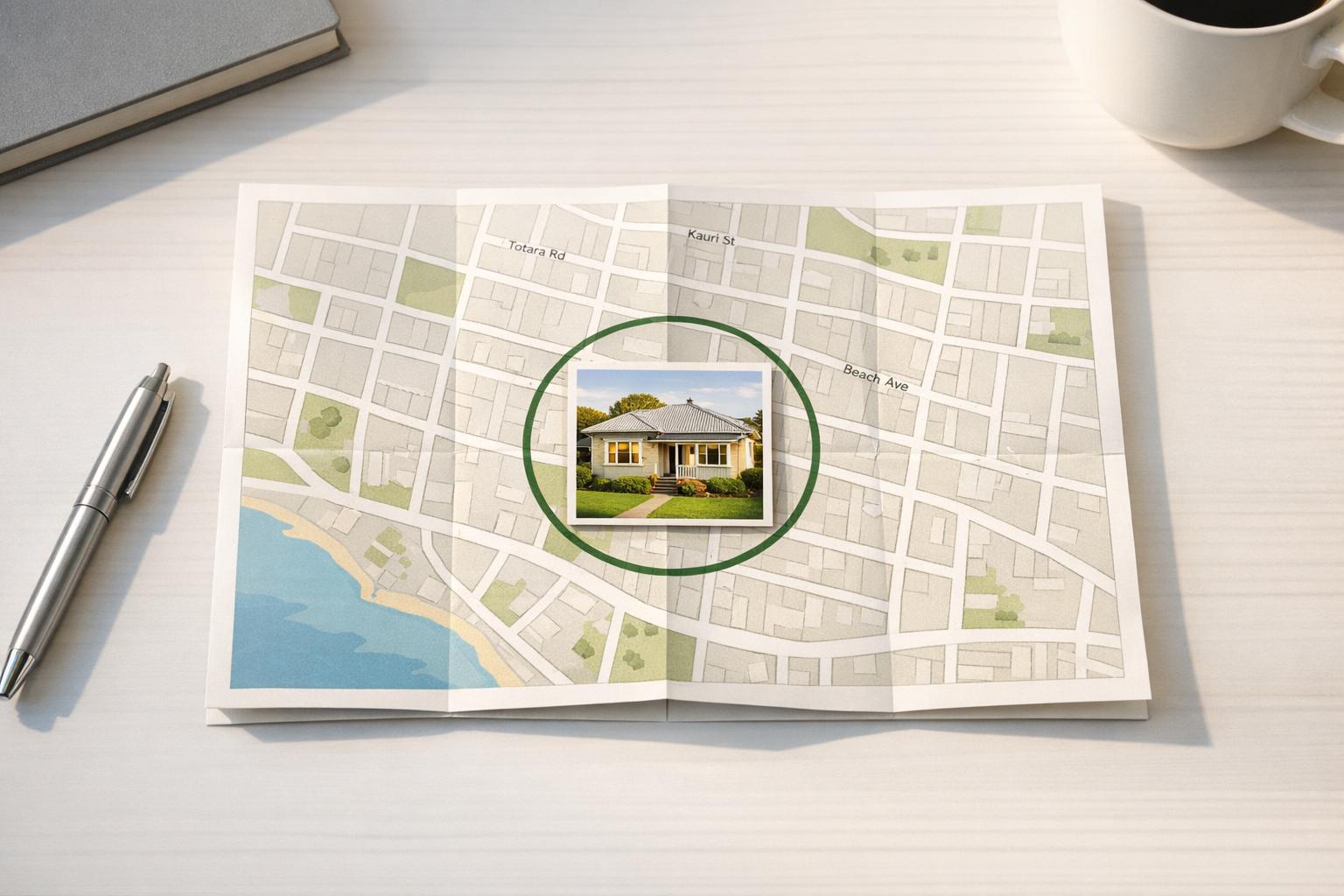
With rising costs, focusing on hyperlocal targeting ensures your advertising dollars are spent wisely. Broad campaigns can quickly drain your budget by reaching people who aren't genuinely interested in your properties.
Narrowing your focus to specific areas significantly reduces wasted spend. For example, targeting users who are actively researching mortgages or exploring senior living options ensures your ads reach people with real intent to buy. On average, the cost per click on Facebook for real estate agents in New Zealand is around NZ$1.17. However, in high-demand Auckland suburbs like Mt Eden or Ponsonby, Google Ads clicks can cost anywhere from NZ$10 to NZ$25. Hyper-targeted campaigns ensure every dollar works harder, delivering better results without blowing your budget.
This level of precision naturally leads to stronger campaign performance and a higher return on investment.
Ability to Maintain or Improve Campaign Effectiveness
Meta's Andromeda system takes suburb-level targeting to the next level by fine-tuning your messaging for micro-audiences. However, Meta's Special Ad Category for housing imposes restrictions, such as a minimum targeting radius of 24 kilometres (15 miles). This means you can't simply zero in on a single suburb like Remuera without thinking creatively.
To work around this, your ad copy needs to act as a filter. Including specific details like street names, local schools, or landmarks in your messaging can help attract the right audience while Meta's algorithm handles distribution. For instance, instead of a generic "Beautiful Home for Sale", a more effective headline might be: "Just Listed on [Street Name]: 5 Minutes to Westmere Primary."
"The clearest path to motivated buyers and sellers starts with understanding what they're doing, not just who they are." – Brent Gray, Founder, Be Greight
Further refining your audience by buyer type can take your campaign even further. For instance, creating separate ad sets for "First-Time Buyers" (ages 25–34, interested in credit repair) and "Downsizers" (ages 55+ exploring senior living) allows you to tailor your messaging and lower your cost per qualified lead.
Ease of Implementation for Agents
Implementing suburb-specific strategies is straightforward. Start by dropping a pin at the centre of your target area, set a 10–15 mile radius, and use exclusion zones to filter out irrelevant locations like bodies of water or neighbouring suburbs .
You can also create suburb-specific lead magnets to build trust early, such as "5 Things to Know Before Selling in Westmere" or "The Complete Hobsonville Buyer's Guide". Additionally, running separate ad sets for different buyer types - like relocation buyers versus local upsizers - can help you identify which group delivers the best results at the lowest cost.
Relevance to the New Zealand Real Estate Market
For real estate agents in New Zealand, suburb-specific targeting is a must. In Auckland's highly competitive market, generic campaigns often fail to stand out against the backdrop of established agencies. While digital lead generation is generally less expensive in regional markets like Tauranga, Hamilton, and Wellington due to lower competition, the same principle applies: hyperlocal content builds trust.
"Real estate in New Zealand is still built on trust and relationships. If your brand isn't known to the lead when they enter the funnel, your close rate plummets." – David Hannah Marketing
Auckland agents should budget between NZ$1,500–NZ$3,000 per month for Google Ads and NZ$800–NZ$2,000 per month for Meta Ads. By focusing on specific suburbs and tailoring ads to different buyer types, smaller teams and independent agents can achieve strong results even with modest budgets.
6. Use Photos Instead of Custom Graphics
Cost-Effectiveness for Real Estate Agents
Using real photos instead of custom graphics can significantly cut production costs. With New Zealand's average real estate cost-per-click (CPC) rising by 33% between January 2025 and January 2026, finding ways to reduce creative expenses is a smart move for protecting your profit margins.
Your high-quality property listing photos can do most of the work. Instead of hiring a designer to create branded graphics, you can promote your best property shots directly on platforms like Instagram or Facebook. This approach is both quick and affordable, letting you launch campaigns in just minutes. In a market where every dollar matters, reusing existing assets is a practical way to save money while still achieving effective results.
Ability to Maintain or Improve Campaign Effectiveness
In 2026, authentic photos are outperforming polished graphics. Ads with genuine content can boost click-through rates (CTR) by as much as 29% compared to traditional agent-focused ads. Keeping text overlays minimal also enhances ad performance.
"Authentic, user-generated style content often outperforms overly produced creative." – Bump Digital
Instagram Story ads that feature full-screen vertical photos see a 29% higher CTR than standard Feed ads. Meta's algorithm rewards content that resonates with users by lowering costs, while less engaging ads face higher CPMs. Simple, authentic property photos help you avoid these penalties and keep your campaigns cost-efficient.
Ease of Implementation for Agents
You don’t need to create new visuals - your existing professional listing photos are enough, especially twilight shots with sharp contrasts, which are great for grabbing attention. Highlight one standout, well-lit hero image and back it up with 3–5 key shots showcasing the kitchen, living area, master bedroom, and outdoor spaces. This tactic ties in with earlier advice on reducing production and management costs.
Keep text overlays to a minimum and let your images do the talking, with ad copy providing additional details. Carousel ad formats are a great option, as they allow you to display multiple property angles and drive 72% more engagement than single-photo posts. You can also experiment with lifestyle images, such as photos of nearby cafes or parks, as lead visuals. These community-focused shots often perform better than standard interior photos in hyperlocal campaigns.
Relevance to the New Zealand Real Estate Market
In New Zealand's 2026 market, buyers are drawn to genuine, community-driven content rather than polished, overly branded graphics. Building trust and fostering local connections are key to driving sales, and authentic photos are far more effective at achieving this than slick designs.
"Raw, authentic video shot on a phone often outperforms polished cinematic productions. It feels more real and less like an ad." – Koro
With CPCs on Meta platforms ranging from NZ$0.60 to NZ$3.50, keeping your creative costs low while maintaining engagement is essential. Start small by testing different photos with budgets as low as NZ$2 per day to see which images resonate most with your audience before scaling up. Using authentic visuals not only keeps your ad spend in check but also strengthens your connection with New Zealand buyers, helping you achieve better ROI through cost-effective strategies.
7. Turn Off Optional Features
Saving Money for Real Estate Agents
Turning off unnecessary features in your ad campaigns can make a big difference, especially when every dollar counts. Meta's platform offers several optional tools, but not all of them are worth the expense. Take the "Boost Post" button, for instance - it prioritises likes and comments rather than driving actual property enquiries. That’s a problem when New Zealand's average cost-per-click for real estate ads hit NZ$1.12 in 2026. Spending on metrics that don’t translate to sales is a quick way to hurt your return on investment.
"The Boost Post button is the most expensive way to buy attention on Instagram." – Feedbird
To get better results, use the full Ads Manager and choose "Leads" or "Conversions" as your campaign objective. This ensures your budget is focused on generating genuine buyer interest. Another tip? Limit retargeting to just 10–20% of your total budget. Overdoing retargeting can lead to high-frequency costs, sometimes exceeding NZ$65 per thousand impressions. By cutting out features that don’t drive conversions, you can redirect funds toward strategies that actually work.
Keeping Campaigns Effective
Meta’s algorithm performs best when it has room to breathe. For example, using a single 24-kilometre radius and avoiding layered interest filters can help Meta's Andromeda algorithm find high-intent buyers you might otherwise miss. Businesses that embraced automated "Advantage+" strategies in early 2026 saw 20–40% better performance. These campaigns not only reduced cost per lead but also delivered higher conversion rates.
Instead of micromanaging every detail - like placements or overly specific demographics - let the algorithm do the heavy lifting. Broad targeting allows the system to optimise your ads for better results.
Simple Adjustments for Real Estate Agents
Making these changes in Meta Ads Manager is straightforward. For property listings, avoid using the "Traffic" objective. Instead, switch to "Lead Forms" (also called Instant Forms), which keep buyers on the platform and often deliver 2–3 times higher conversion rates. Similarly, enable "Advantage+ Placements" to let Meta find the most cost-effective ad spaces across Feeds, Stories, and Reels, rather than manually selecting placements.
One critical point: New Zealand real estate agents are required to use the "Special Ad Category (Housing)" setting. This ensures compliance with anti-discrimination rules by limiting certain targeting options. While this might seem restrictive, it actually aligns well with the Andromeda algorithm’s preference for broader targeting.
Adapting to the New Zealand Market
In high-cost markets like Auckland, where advertising expenses are steeper than in regional areas, cutting out optional features is essential. Automation and simplified campaign setups are especially valuable in New Zealand's competitive 2026 market, where rising CPCs mean you need to spend smarter, not more.
"The businesses that adapted their campaign setup strategies in late 2025 are now seeing 20–40% better performance than competitors still using outdated approaches." – Jason Poonia, Founder, Lucid Leads
Conclusion
Reducing advertising costs in 2026 is all about smarter spending while keeping results intact. These seven strategies can help agents lower expenses without sacrificing performance: opting for flat-fee services instead of percentage-based agencies, starting with basic packages, running shorter campaigns, managing your own ad account, targeting specific suburbs and buyer demographics, using photos instead of custom graphics, and disabling optional features that don't directly boost conversions.
The key takeaway here is that cutting costs doesn't have to mean cutting effectiveness. The challenge lies in finding the right balance. Lowering expenses only makes sense if it leads to qualified leads. Focus on metrics that matter - like engagement and conversion rates - rather than superficial numbers. Keep in mind that a low cost per lead is only valuable if those leads are genuinely interested. Testing plays a crucial role; what works for a high-end Auckland property might not suit a rural listing in Taranaki. Plus, ad creative that works today might lose its edge in as little as 10 days as audiences grow saturated.
Start with a testing budget of NZ$200–$1,000 per month to gather meaningful data. Try different photos, headlines, and calls-to-action. Keep an eye on ad frequency to know when it’s time to refresh your content.
Given that advertising costs in New Zealand are about four times more volatile than the global average, staying flexible and refining your strategy is non-negotiable. Success in this unpredictable market comes from ongoing testing, strategic spending, and data-driven adjustments.
FAQs
What’s a realistic weekly budget to get enough leads for Meta to optimise?
A realistic weekly budget for Meta ads typically falls between NZ$15–$30 per day, adding up to NZ$105–$210 per week. The specific amount you choose should align with your target audience and campaign goals. Staying within this range can help you manage costs effectively while driving lead generation and maintaining ad optimisation.
How do I stay compliant with Special Ad Category (Housing) and still target locally?
To meet the requirements of the Special Ad Category (Housing) on platforms like Facebook in 2026, steer clear of targeting based on age, gender, ethnicity, or other protected characteristics. Instead, focus on location-based targeting, such as specific cities, suburbs, or regions. This approach aligns with housing ad policies and ensures compliance.
When creating your ad content, prioritise adherence to housing laws and platform guidelines. By concentrating on geographic areas rather than demographic details, you can effectively target local audiences while staying within the rules.
Which tracking setup (Pixel, CAPI, CRM) gives the biggest cost-per-lead drop?
The best way to cut down on cost-per-lead in 2026 is by combining server-side tracking, such as the Conversions API (CAPI), with CRM integration. This setup enhances the accuracy of conversion tracking and makes campaign optimisation more effective, ultimately saving on costs. While Pixel tracking still has its place, pairing CAPI with a CRM provides a more dependable and budget-friendly solution - especially as Meta continues to refine its algorithms and adapt to privacy changes.